
About Quality
Following up on the question of what makes a work of art "good"

I try to post one of these essays every two or three weeks and don’t usually follow one right up with another. But a friend asked a worthy question in response to a recent post in which I had suggested that one painter’s work was good while another from the same school was not so good. What, my friend asked, did I mean by “good”? As I responded in the comments, I only meant to describe how well either artist had made the kinds of things that both had chosen to make, which in that case were abstract expressionist paintings. But as I also acknowledged, this matter of art’s material quality can be a very tricky subject, and one we’ve tiptoed around as if on eggshells for decades within our wider conversations about art. I believe this discomfort (we might even call it a neurosis) about quality stems from the exclusionary and hierarchical rhetoric of the critique that grew up alongside the Modernist movements in European and American art during the nineteenth and twentieth centuries: an often bombastic staking of ideological flags into the supposed cultural superiority of one form to another. In all such assessments, an artist’s worth is measured by how correctly they reflect the party line of whichever approach is deemed ascendent in the moment. Yes, skill and quality might be discussed, but always in reference to the avant-garde project of art’s commanded forward trajectory. Those seen to be holding it back are reviled while its boldest innovators are crowned with the mantle of genius. Strangely, this hierarchical critical sorting continues today despite the supposed end of art history now forty six years behind us in the rearview mirror.
In reality, there is no advance and never has been. Art is always an expression of what and where we are, and while the where might change, the what often stays pretty much the same. Artistic movements follow naturally shifting cultural tastes and interests from one generation to the next, as well as from one maker to another. Sometimes we see an evolution from a seemingly simpler method at one end of such a shift to a related form that feels more sophisticated. But the movements themselves are more often lateral, or even circular, than ascendent. The art of the Baroque was not superior to that of the Renaissance (save in those aesthetic ideals that Baroque artists preferred) any more than Renaissance art was inherently better than Romanesque, Greek or Egyptian art, and so-on right back to the neolithic caves. Neither was Western art as a whole ever superior to all the myriad art forms of other peoples in other parts of the world.
The writers who talked about and assessed artistic things prior to the Modernist revolution tended to be connoisseurs (knowers) of the styles they cared about most, making qualitative distinctions between the physical characteristics and levels of skill present within them. Historians shuffle the modes and ideas of those works in and out of specific movements, but for a long time critics mainly discussed a work’s inherent worthiness within its kind. Modernist critique, however, began to walk away from the concerns of the connoisseur and pay more attention to the competing dynamics of ideology. Some modern critics — like Robert Berger, Robert Hughes, Roberta Smith and Jed Perl — still cared about and deployed a degree of connoisseurship in their analysis, but towards the end of its trajectory in the Postmodern 1980s and 90s the idea of any objective standards of quality seems to have been written out of the critical discourse altogether and replaced with a weirdly oxymoronic stew of hectoring deconstructionist theory on the one hand and a gushing reportage on the seasonal cycles and colorful personae of art world celebrities on the other, which frankly feels more akin to Haute Couture.
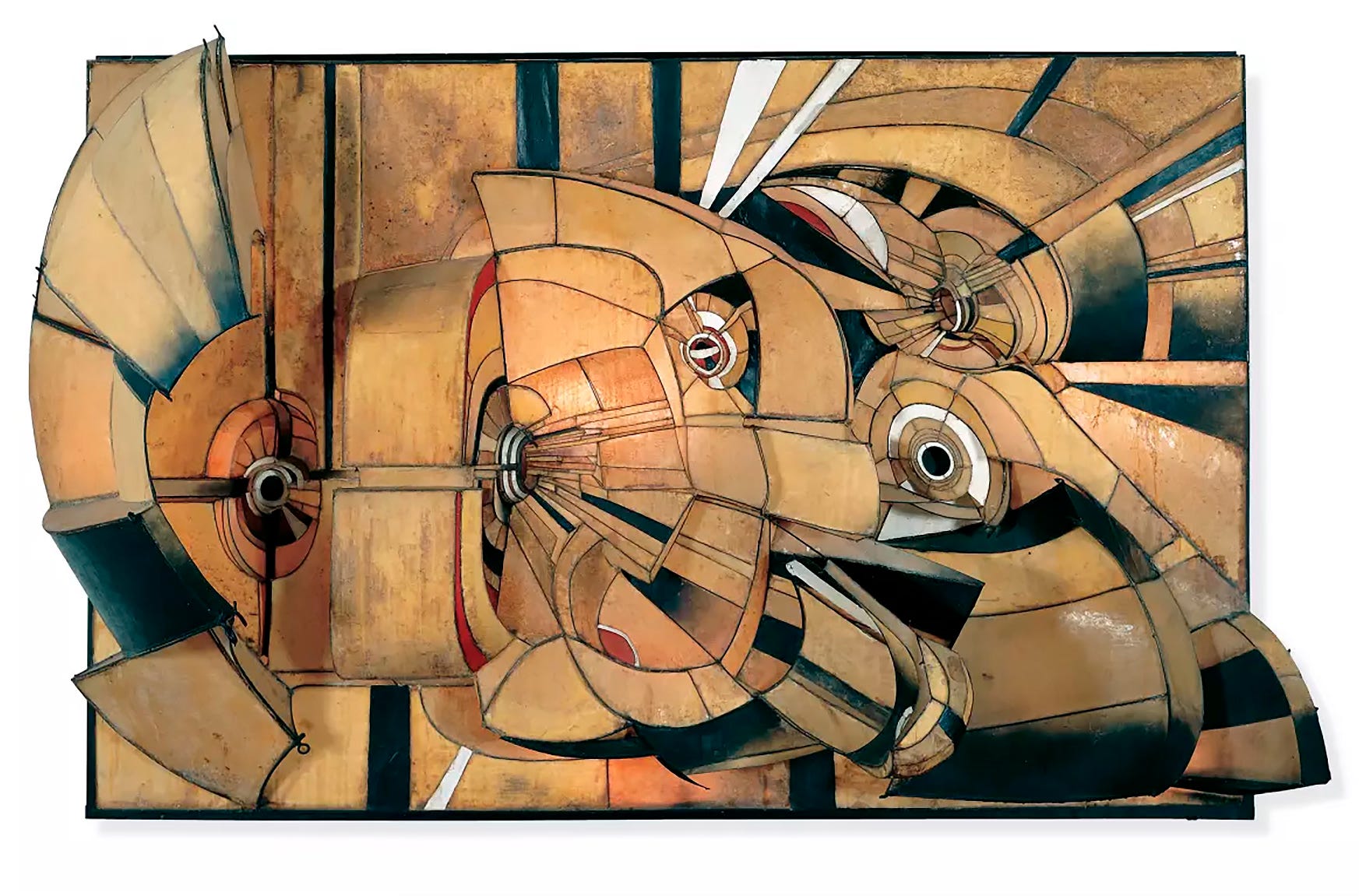
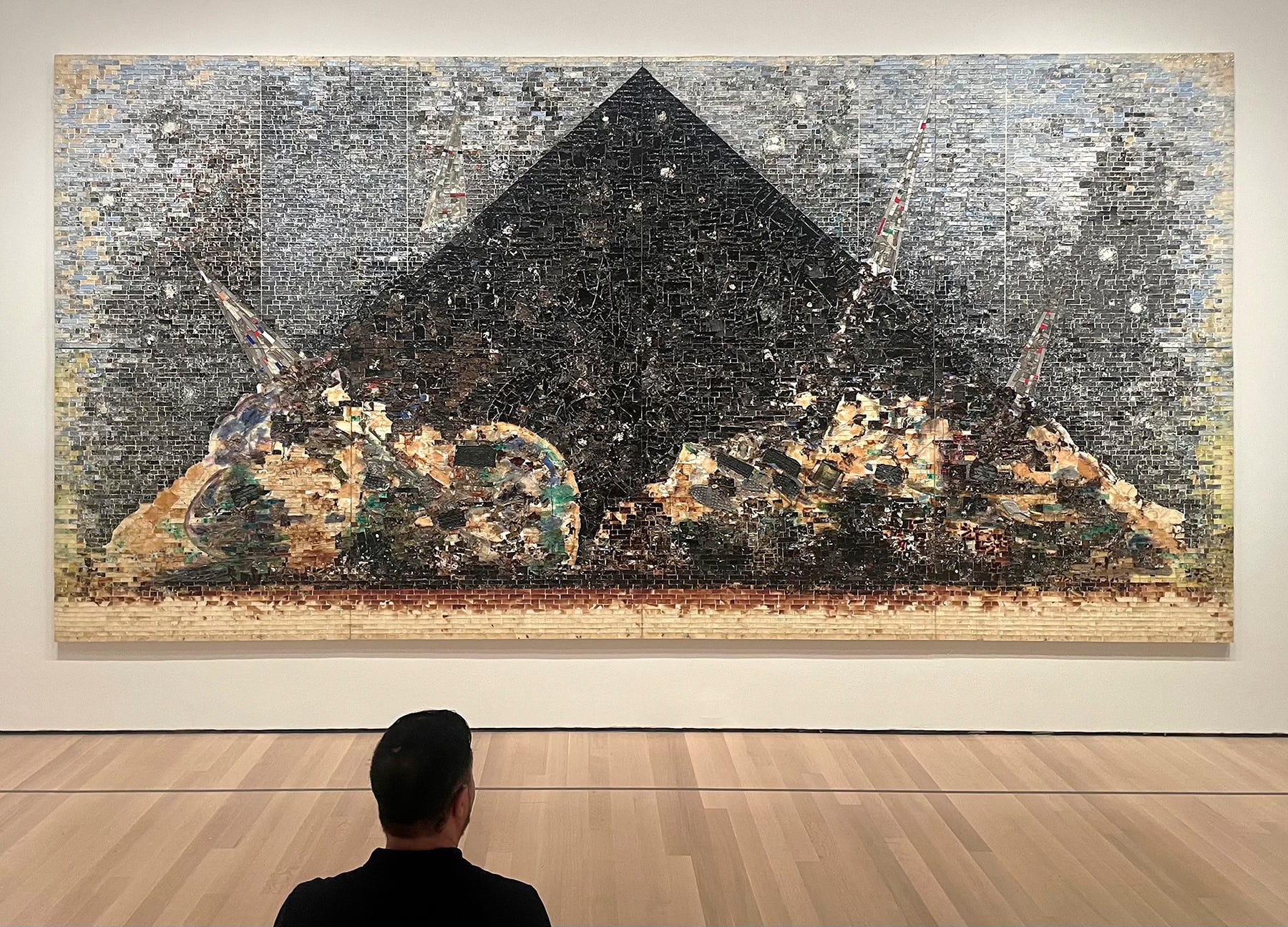
I don’t mean to suggest that the quality of a work of art is only about its physical makeup. It resides in every way that the physical thing communicates the truest expression of whatever vision, understanding or emotion that particular maker discovered through the making of that particular work. But the quality of such visions is inextricably bound to the quality of their delivery. Lee Bontecou’s Untitled, 1966, or Jack Whitten’s 9-11-01, wouldn’t move us as they do if the artists in question had not made them in the exact material ways that they respectively did. They did what they did so well, and so much more artfully than a great many other people who have tried to make “good” physical things, that we single them out to be preserved, looked at again and again, and both remembered and revered. It is precisely this intrinsic quality that enables the strongest art to live on irrespective of the critics’ or market’s approval, or even of the wider culture’s limitations and prejudices. Though somewhat ignored for long periods, both artists cited above eventually surfaced in the public eye because quality has a life of its own that operates above the chatter of our shifting cultural tastes and the rising and falling tides of fashion. Our best museums are a testament to this reality in that they eventually house some of those works whose merit is genuine enough to have finally emerged through the less worthy chaff that time itself sorts out. It is not therefore only the critics, historians or curators who decide what will last, but the art itself. Good work has a way of outliving its detractors, while the lesser stuff is often forgotten right alongside the experts who insisted so vehemently on its importance.
Tricky though it may be, we should never shy away from studying, learning and talking about artistic quality. It is crucial though, in all such conversations, for both the artist and the public to recognize that it does not result from successfully applying some academically codified metric of methodology or ideology to our work, but of subtly marrying the most challenging external means at our disposal to our most demanding internal aspirations. It resides entirely in the relationship of the physical material we choose to that more insubstantial content of our uniquely personal visions. These two components form a partnership that enables them to rise or fall together. Some art does it well where a whole lot of other art does it badly, and it is perfectly okay to point this out, provided that we have truly learned to know the difference by teaching ourselves to be true connoisseurs. It might help though to begin all such critical examinations by throwing out the hierarchical prejudices of intellectual, philosophical or stylistic classification altogether, because there, to me at least, is where all the trouble resides. Saying that one artist is better at making a particular kind of thing than another, as a connoisseur does, is not the same as critically declaring that the kind of art one chooses to make is somehow intrinsically superior or inferior to another kind — i.e. realism versus abstraction, conceptualism versus aestheticism, minimalism versus expressionism, and so on ad-infinitum. That is the stuff of the fashion show, which is precisely what the art world has now become.
In the end, it matters not at all what kind of art we choose to make. What matters is how well (how artfully) we make it. If we can’t accept this, why bother to call it art at all? Without an interest in the actual art of doing what we do, we may as well admit that we are doing something else.
Christopher, thanks for your
thoughtful response to my question. These two sentences sum it up perfectly. “It (Good art) resides entirely in the relationship of the (handling of the) physical material we choose to that more insubstantial content of our uniquely personal visions. These two components form a partnership that enables them to rise or fall together.” The brackets are my additions.
“Comparison is the thief of joy.” — T. Roosevelt
Why aren’t you a professor of art in a great college?
Quality is not on everyone's mind right now but money is, alas.