
WHAT ART IS NOT ABOUT
(Hint: The Art World)

The sheer volume of artistic works to which we are now daily subjected through our digital devices and services can be both dizzyingly disorienting and also often quite discouraging for us makers. There is just so damn much of it, and so much variety in the styles, ideas and intentions for it, that it can be challenging to feel any certainty about what we hope to achieve in our own work; or worse still, whether the things we’ve already made can have any meaning or presence at all in this riot of attention-seeking clamor.
I read a fine article here on Substack earlier this week that had just this sort of dampening effect on my own always tenuous grasp of hopefulness about the artist’s life — or more accurately, about the life of art itself. In a piece titled The Strange Grief of Moderate Success, gallerist and art advisor Greg Rook comes at the subject from the point of view of those artistic careers that measure their success in direct relation to the approval or indifference (in the forms of financial, critical and institutional support or lack thereof) of the market. It is a well-written, thoughtful article and one that tackles an important aspect of this life that is generally glossed over or ignored in the more public conversations about it: namely the feelings of disappointment and even grief which can hit hard when the recognition, success and forward advancement of a career stalls at a respectable but no longer promising plateau — where some recognition, a reasonable livelihood and a degree of critical praise have all been achieved, but the next boost to that higher stratosphere of acclaim simply never comes. Strangely, this is a reality of many dedicated careers in the arts which the programs and teachers in art school rarely warn us about. Amongst ourselves, of course, we talk about it all the time, and especially so as we grow older and have lived for many years with the day-to-day challenges of winning attention for and a livelihood from the things we make. It can certainly make one feel glum, and that can take the shape of a slowly building unease and sadness over the long haul, if we choose to focus our hopes on such things (and I think we probably all do hope for some kind of validation for the things we make). I often describe myself to others who don’t live this life as something akin to an aging prize fighter who has had some victorious bouts, but also keeps gamely climbing back into the ring after getting knocked down. More often I just shrug and say “it’s a tough racket.”
I will however attempt here to offer an antidote for this kind of malaise to both Mr. Rook and to any of my fellow makers who may be feeling it.
The variety and quantity of artistic things that assaults us every day through online platforms like Instagram and Facebook, and in the magazines, galleries, fairs, museums and other venues where art is put on display, can feel daunting. We may be reassured by those celebrated works which affirm our own aesthetics and values, but can just as often succumb to anxiety at the attention (and the high market premiums) lavished on works we do not care for at all. “If they like that stuff”, we fret, “how on earth will they ever see or understand what I am doing?”
The surprising secret about much of this variegated output, however — and especially so at those exalted heights which Mr. Rook pinpoints as the presumptively overarching goal we too often fail to attain — is that so much of it is actually alike. The variety, novelty and fashionable market “buzz” that attach to such things are a performative scrim that can deftly obscure a repetitive sameness at their core. They may not even be art at all, but mere art-like products made to attract the celebrity status and critical hype which both the makers themselves and the culture as a whole have come to misidentify as the defining locus of artistic quality and success. The ephemeral metrics of novelty, innovation and an appearance of originality upon which the art world is so fixated feed an insatiable hunger for riches and fame within the aspiring hearts of those artists who have drunk this particular brand of Koolaid and more so in the commercial brokers and critical boosters who hope to reap either a financial or reputational gain from their works. There is an intoxicating pageantry in these emanations, but one that often lacks a crucial substance without which there is scant promise of an ongoing life for any art so calculatingly conceived. The result is an ironic inversion of the old Greek maxim of Ars longa, vita brevis (life is short but art is long). In this formulation, the life of art, like that of a mayfly, can be as brief as its seasonal cycle as defined by the market we now think of as the central and indispensable “world” of art. As the old Bard put it:
“. . . These our actors,
As I foretold you, were all spirits and
Are melted into air, into thin air:
And, like the baseless fabric of this vision,
The cloud-capp’d towers, the gorgeous palaces,
The solemn temples, the great globe itself,
Yea all which it inherit, shall dissolve
And, like this insubstantial pageant faded,
Leave not a rack behind.”
But if this cycling pageant we associate with artistic quality and success is not where those things truly reside, where then might they be found? What gives art its real life and where does it actually live? I don’t mean to suggest that good, or even great art does not happen within the bounds of the art world or its markets, or that originality and innovation are not valid components of its success. Of course it does and of course they are. I am only saying that it is not the art world that defines, designs or creates that quality, whether through high-minded critical discourse or in the high ticket financial transactions in the galleries, fairs and auction houses. The quality always has to come first and that is something wholly created by the maker, regardless of the degree to which it may or may not have been sparked in reference to other things happening within that world. It is not therefore the zeitgeist of the current fashion that accounts for the quality of a work. In fact, the forming of any stylistic or conceptual trend is often the first step away from real originality or genius, and into the mediocrity of a merely calculating and formulaic commerce. Willem DeKooning, a great innovator and painter of the Modernist New York School, worked in the company of some lesser artists (Barnett Newman always comes to mind for me) who achieved nearly equal acclaim on the back of works not nearly so original, masterful or intrinsically good as deKooning’s. What the lesser artist in any such “school” is good at, is milking the enthusiasm of a shared art historical moment for the celebrity status, critical and financial gains that can get attached to it in the public mind. It was DeKooning himself who said (when a younger Robert Motherwell lobbied their group to coin some defining title) “It would be a disaster to name ourselves.” The point being that the most meaningfully innovative movements flow out of quality and mastery. It doesn’t work the other way around.
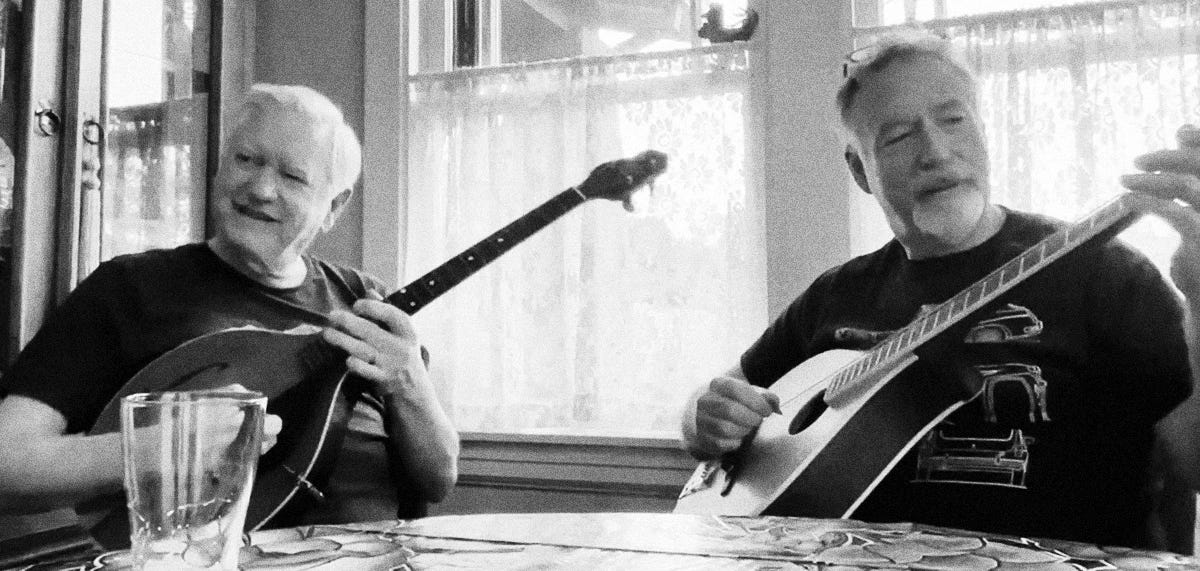
I visited an old friend recently who plays Irish folk music. He’s done it professionally from time to time, but his main career — at which he also excels — is in an entirely different and unrelated discipline. The music is something he seems to do for his own pleasure and satisfaction. I play that kind of music too, though not nearly as well as he does, but well enough to sit with him from time to time and swap some tunes and riffs. On this recent visit he said something about this genre we both love which goes right to the heart of this question of what art is and where it lives. Irish music is quirky, technically-challenging stuff that is clearly not for everybody. Some folks love to listen to it and others just can’t stand it. What my friend said that struck me so is that however you might feel about it from the outside as a listener, you kind-of have to “play it yourself to truly get what is so wonderful about it”, because the wonder is really in the playing, and playing alongside somebody who does it better than you do, so long as they have a generous spirit, is one of the most nourishing creative experiences we can have.
I can only speak for myself, but I do know that my reasons for becoming a painter are very much like those of almost every other of my artistic peers with whom I am friends and who I most admire. And this is not so different from my reasons for playing Irish jigs and hornpipes. The goal was always to figure out how to do all such things as well, effectively and originally as those artists who move me most. I didn’t become a painter because I wanted to be as famous as Vermeer or Van Gogh or Turner — all of whom inspired me when I began painting as a teenager — but because I wanted to be able to make works that would be as intrinsically good as theirs and powerful enough to move somebody else in the same way. That is still what I want, now fifty years later.
The joy, as well as all the struggles, hurdles and disappointments of being an artist of any kind all reside in the lifelong project of learning, through careful study, what makes other people’s work great, and of discovering the path, through much trial and error, that might one day lead our own work to that goal. None of that has anything to do with becoming famous or rich, however much those rewards might result from the effort. Furthermore, any art made solely for those purely promotional purposes will last no longer than the cycle that brought it acclaim. It is only the other kind that lives long, and that stuff often achieves no fame in its own time.
Love this Christopher and the photo of you and Farley is priceless. The quote that comes to mind after reading your essay is from Stephen King's book,
On Writing: A Memoir of the Craft.
“Writing isn't about making money, getting famous, getting dates, getting laid, or making friends. In the end, it's about enriching the lives of those who will read your work, and enriching your own life, as well. It's about getting up, getting well, and getting over. Getting happy, okay? Getting happy.”
Hi Christopher, I always enjoy your Substack essays. This one provokes a question you might want to address in a subsequent post. What makes an artwork intrinsically good? You allude to it, but it would be great to hear your thoughts.